Weekly Reflection 3 – Inquiry Based Learning
Question?
The overarching question for this week is: How can student directed inquiry-based learning create meaningful and engaging educational experiences while still providing students with the structure and support they need to succeed?
What?
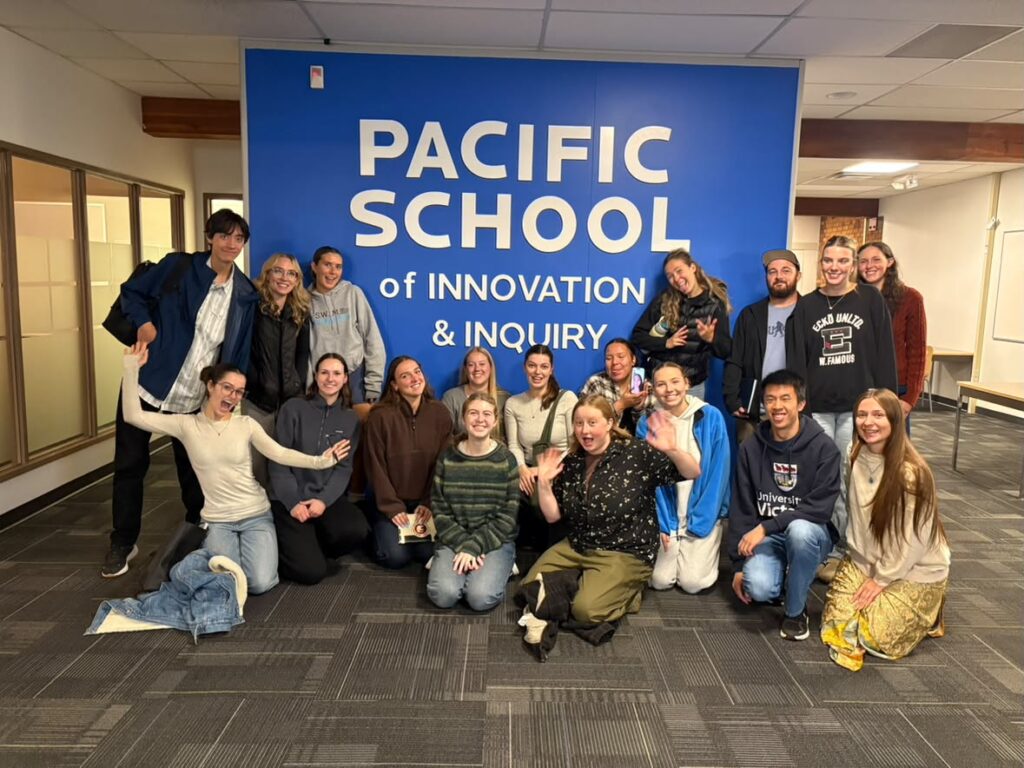
This week we had the opportunity to tour the Pacific School of Innovation and Inquiry! The school was founded by Jeff Hopkins around 11 years ago after being frustrated with the current ways of the school system. The school has significantly grown over the past 11 years, and it now has approximately 120 students in grades 9-12. One of the main components of the school is that there are no traditional classes. Instead, learners participate in students directed inquiry projects. They begin with a question or a wonder, and they begin using the resources provided by the school to explore it. The school has many different spaces to accommodate kids learning in their inquiries, like a music studio, drama stage, kitchen, textiles and loom room, technology, and an art space. Another huge part of the school is that students meet with a “teacher” multiple times during the day to have meetings. This is where assessment of learning happens, but also to help guide their inquiries.
So What?
The tour made me think differently pf how learning can look when students have more control over what they are learning. I really like the idea of allowing students to follow their own interests and questions instead of having everyone in a classroom learning the exact same thing at the exact same time. While touring the school, all the kids were so engaged in their learning and on task. If I was to walk into a traditional high school, I bet I would have seen 50% of the kids on their phones or talking off topic. When I walked into the collaboration space in PSII, all the kids were so invested in the schoolwork and were either independently studying or collaborating on meaningful subjects. It was incredible to see.
Now What?
As a future teacher, this experience made me think of how I want to incorporate inquiry-based learning into my classrooms. I have a fear that giving students so much academic freedom and responsibility, I would run the risk of having some students not succeeding with this type of learning. Some students need the guidance and structure that traditional schools give. This gives me a takeaway that not every student’s learning has to be the same, and it is possible for these two types of learning to co-exist. Maybe it’s in the form of more inquiry projects in typical school subjects or giving students more choice when it comes to project type and subject.